
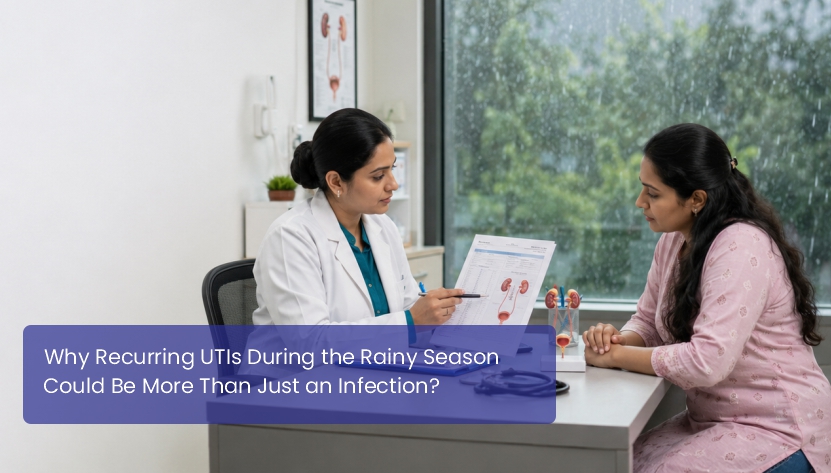
Why Recurring UTIs During the Rainy Season Could Be More Than Just an Infection?
Every rainy season, clinics fill up with patients complaining of burning urination, frequent trips to the bathroom, and a general sense of discomfort. Most are handed a course of antibiotics and sent home. For many, that is enough. But for some, the infection keeps coming back and behind that stubborn recurrence, something far more serious may be at work.
Urinary Tract Infections (UTIs) are undeniably more common during the monsoon. Humidity, poor sanitation, contaminated water, and dietary changes all create ideal conditions for bacterial growth. However, the symptoms of a UTI and the early warning signs of bladder cancer are remarkably similar and that overlap is dangerously under-recognized.
Why Monsoon Increases UTI Risk
The rainy season changes our environment in ways that directly affect urinary health:
- High humidity promotes bacterial growth in the urinary tract
- Waterlogging and poor drainage increase exposure to contaminated water
- People tend to drink less water, leading to concentrated urine that irritates the bladder
- Changes in hygiene habits and increased moisture around the body raise infection risk
These factors make UTIs genuinely more frequent during the wet season. The problem begins when patients and sometimes even doctors assume every episode is simply a seasonal infection.
When a UTI May Not Be Just a UTI
There are specific signs that suggest something more serious deserves investigation:
Blood in Urine (Hematuria)
This is the most critical red flag. Blood in urine whether visible to the naked eye or detected on a urine test is never normal. It is one of the earliest and most consistent symptoms of bladder cancer. Many patients dismiss it as a side effect of their infection. It should always prompt further evaluation.
Recurrence Despite Treatment
If UTIs are returning within weeks of completing a full antibiotic course, the cause may not be bacterial. A tumour in the bladder can mimic infection symptoms and create an environment that makes recurrence appear more likely.
Pain Without Infection
Bladder discomfort or pelvic pain that persists even when urine cultures show no bacteria is a warning sign. So is an urgent and frequent need to urinate without an identifiable cause.
Understanding Bladder Cancer: Who Is at Risk?
Bladder cancer is more common than most people realize. It is more prevalent in men, in smokers, in people with long-term exposure to certain chemicals, and in those over the age of 50. However, it can affect younger individuals too — and its early symptoms are almost always urinary in nature.
The good news is that when caught early, bladder cancer has a very high treatment success rate. The challenge is that early symptoms are so easily confused with common infections.
What Tests Should You Ask For?
If you or someone you know has experienced recurring UTIs, blood in urine, or persistent urinary discomfort, the following investigations are worth discussing with a urologist:
- Urine cytology — checks for cancer cells in urine
- Cystoscopy — a camera examination inside the bladder, considered the gold standard for diagnosis
- Ultrasound of the urinary tract — to detect any structural abnormalities
- CT urogram — detailed imaging of the kidneys, ureters, and bladder
When to See a Urologist
Do not wait through multiple courses of antibiotics before seeking specialist opinion. Consult a urologist if:
- You have had two or more UTIs within three months
- There is visible or microscopic blood in your urine
- Symptoms persist beyond a full antibiotic course
- You are over 45 and experiencing new urinary symptoms
Conclusion
The rainy season should not become a reason to normalise urinary symptoms. A UTI that keeps returning is not just an inconvenience — it is your body asking for a closer look. Early detection of bladder cancer dramatically improves outcomes. If something feels persistent or unusual, trust that instinct and speak to a specialist.
Contact Us
The Gujarat Uro Oncology Associates team offers expert consultation, diagnosis, second opinions, and treatment planning for urological cancers. To learn more or book an appointment, contact 91 75730 04253 or email bakshihemang@yahoo.co.in.